

Casting
Application Of Precision Casting in Hardware Tool Manufacturing Industry
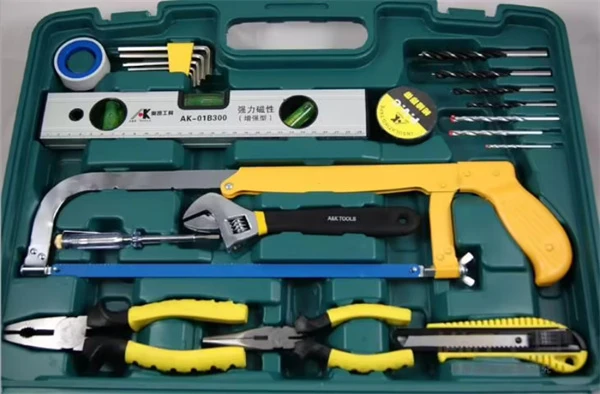
Commonly used hardware tools, precision castings with high finish:
Electrical appliances, civil precision castings, marine precision castings, stainless steel castings, Zhongwei precision casting
Precision castings are not only suitable for casting of various types and alloys, but also produce castings with higher dimensional accuracy and surface quality than other casting methods, and even complex, high temperature resistant and difficult to process castings that are difficult to be cast by other casting methods. , can be cast by investment casting.

Investment Casting Multifunctional Wrench
The so-called investment casting process, simply put, is to use fusible materials (such as wax or plastic) to make a fusible model (referred to as investment mold or model), and coat it with several layers of special refractory coatings, which are dried and hardened. After forming an integral mold shell, the mold is melted from the mold shell with steam or hot water, and then the mold shell is placed in a sand box, filled with dry sand molding around it, and finally the mold is placed in a roasting furnace for high temperature. Roasting (for example, when a high-strength mold is used, the mold after demolding can be directly fired without molding), after the mold or mold is fired, molten metal is poured into it to obtain a casting.

Investment casting process hardware tool jaws
The CNC Technology Research Institute of Shandong University of Science and Technology was established by Qinhuangdao Zhongwei Precision Machinery Co., Ltd. relying on the advantages of technology, talents and scientific research of Shandong University of Science and Technology. It is a scientific research institution that integrates production, learning and research in CNC technology and mechanical equipment . Research directions include: CNC technology and CNC equipment (CNC), CAD/CAE/CAM technology, flexible manufacturing technology (FMS), manufacturing process automation, mechatronics technology and products, digital and networked manufacturing, etc.
The company is a manufacturing joint enterprise of mechanical and electrical products with complete internal supporting facilities from blank and parts manufacturing to complete machine assembly. It has established a complete set of strict development, technology, production and quality management systems. The company and its affiliated business departments have passed GJB 9001A-2001, GB/T19001, ISO9001:2000, ISO/TS16949:2002 quality management system certification, with the ability to develop complex high-precision CNC mechanical and electrical products, research and mass production.
Process flow
Wax pressing (wax injection to make wax mold) --- wax repair --- wax inspection --- tree group (wax module tree) --- shell making (first dip, sand, then dip, and finally mold
Shell air-drying) --- Dewaxing (steam dewaxing) --- Mold shell roasting -- Chemical analysis -- Pouring (casting molten steel in the mold shell) --- Vibration shelling---
Casting and casting rod cutting and separation---grinding gate---initial inspection (raw embryo inspection)---shot blasting cleaning---machining---polishing---finished product inspection--- warehousing
The casting production process is generally like this. Generally speaking, it can be divided into wax pressing, shell making, pouring, post-processing, and inspection.
Press wax includes (press wax, trim wax, tree group)
Wax pressing---use wax pressing machine to make wax mold
Repair wax---correct wax mold
Group tree --- group wax mold into tree
Shell making includes (sand hanging, pulp hanging, air-drying)
Pouring includes (roasting, chemical analysis also called spectrum, pouring, shell shock, gate cutting, gate grinding)
Post-processing includes (sand blasting, shot blasting, correction, pickling)
Inspection includes (wax inspection, initial inspection, intermediate inspection, finished product inspection)
Develop
Precision casting is also called lost wax casting. Its products are precise, complex, and close to the final shape of the part, and can be used directly without processing or with little processing. Therefore, investment casting is an advanced process with near-net shape.
Ancient my country: Prince Wuding, Bronze Ban, Bronze Lion, etc. are all masterpieces of investment casting. Since investment casting was used in industrial production in the 1940s, it has been developing at a rapid rate for half a century. In particular, European and American countries are developing rapidly. Investment casting is used in almost all industrial sectors, especially in electronics, petroleum, chemical, energy, transportation, light industry, textiles, pharmaceuticals, medical equipment, pumps and valves. In recent years, my country has developed rapidly.
The development of investment technology enables investment casting to produce not only small castings, but also larger castings. The outline size of the largest investment casting is nearly 2m, while the minimum wall thickness is less than 2mm. At the same time, investment castings are also becoming more precise. In addition to linear tolerances, parts can also achieve higher geometric tolerances. The surface roughness of investment castings is also getting smaller and smaller, which can reach Ra0.4μm.
Classification
•Ceramic mold casting
A casting method for producing castings by using ceramic slurry to make a casting mold. Ceramic slurry is mixed with ethyl silicate hydrolyzate and fine refractory sand with relatively pure texture and high thermal stability, such as fused quartz, zircon, corundum, etc. In order to make the ceramic slurry gel in a short time, calcium hydroxide or magnesium oxide is often added as a catalyst. Because the composition of the refractory used and its appearance are similar to those of ceramics, it is called ceramic type. Ceramic mold casting is a new process developed on the basis of ordinary sand casting. There are two types of ceramic type: ①The ceramic type is all poured from ceramic slurry. The production process is to first fix the pattern on the mold plate, coat the sand box, and then pour the adjusted ceramic slurry into the sand box. ②Using a bushing, pouring ceramic slurry in the gap between the bushing and the pattern to make a mold. The bushing can be sand type or metal type. Pouring the ceramic shell with a bushing can save a lot of ceramic slurry and is widely used in production. The surface roughness of ceramic mold castings can reach Ra10-1.25 microns, and the dimensional accuracy is as high as 3-5 grades, which can achieve the purpose of less machining. Ceramic mold casting has a short production cycle and high metal utilization rate. The largest casting can reach more than ten tons, which is mainly used for casting large-scale thick-walled precision castings and casting single-piece and small-batch punching dies, forging dies, plastic dies, metal dies, die-casting dies, glass dies and other molds. The service life of ceramic casting molds is comparable to that of molds made by machining methods, and the manufacturing cost is lower than that of molds made by machining methods.
●Sand Casting
Among the total casting production, 60-70% of the castings are produced with sand molds, and about 70% of them are produced with clay sand molds. The main reason is that compared with other casting methods, sand casting has low cost, simple production process and short production cycle. Therefore, castings such as engine cylinder blocks, cylinder heads, crankshafts, etc. of automobiles are produced by the clay green sand process. When the wet type cannot meet the requirements, consider using the clay sand surface dry sand type, dry sand type or other sand type. The weight of castings produced by clay wet sand casting can range from a few kilograms to tens of kilograms, while the castings produced by clay dry casting can weigh dozens of tons.
Generally speaking, for medium and large castings, cast irons can be produced with resin no-bake sand molds, and steel castings can be produced with water glass sand molds, which can obtain castings with precise dimensions and smooth surfaces, but the cost is high.
Of course, the casting accuracy, surface finish, material density, metallographic structure, and mechanical properties produced by sand casting are often poor, so when these performance requirements of the casting are higher, other casting methods should be used, such as investment (loss wax) casting, die casting, low pressure casting, etc.