



Alumina Ceramic Parts
Alumina ceramic parts is a ceramic material with alumina (Al2O3) as the main body for thick film integrated circuits. Alumina ceramics have good conductivity, mechanical strength and high temperature resistance. It should be noted that ultrasonic cleaning is required. Alumina ceramics is a kind of ceramics with a wide range of uses. Because of its superior performance, it has been widely used in modern society and meets the needs of daily use and special properties.
Alumina ceramic parts is a ceramic material with alumina (Al2O3) as the main body for thick film integrated circuits. Alumina ceramics have good conductivity, mechanical strength and high temperature resistance. It should be noted that ultrasonic cleaning is required. Alumina ceramics is a kind of ceramics with a wide range of uses. Because of its superior performance, it has been widely used in modern society and meets the needs of daily use and special properties.
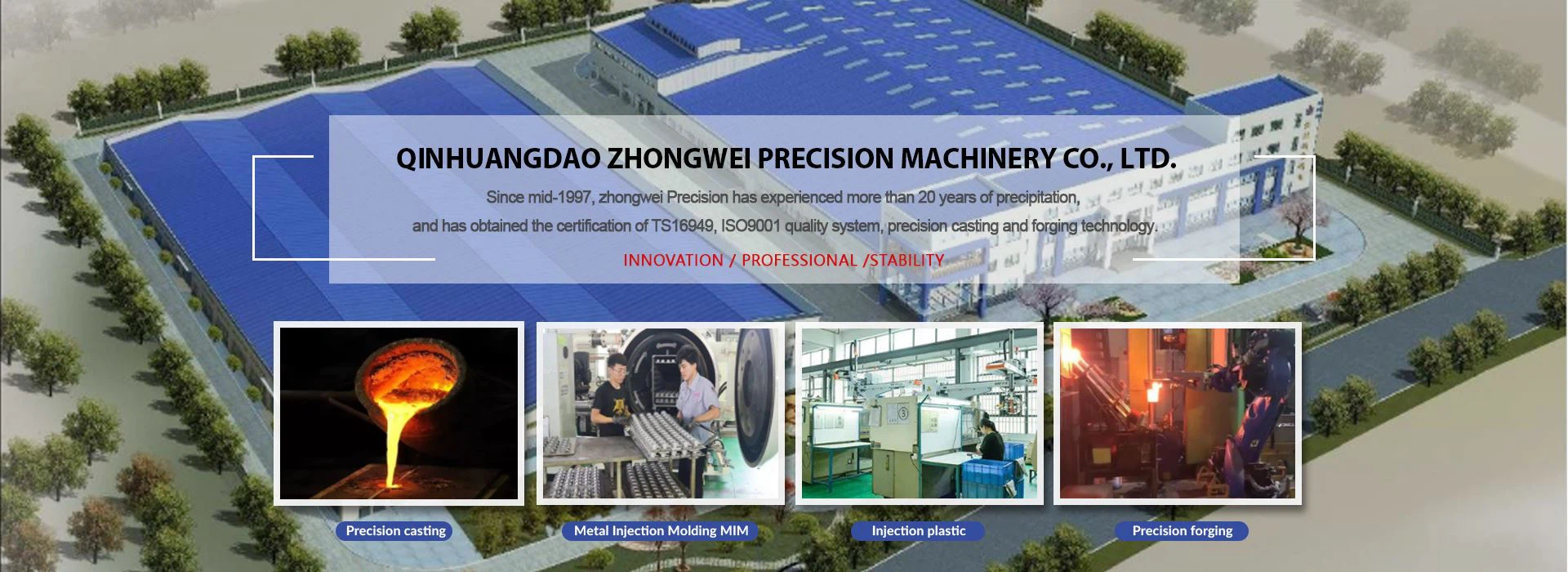
Zhongwei Precision is committed to providing domestic and foreign customers with advanced ceramics with high strength, high toughness, wear resistance, corrosion resistance and high temperature resistance. It is a high-tech enterprise integrating R&D, production and sales of industrial precision advanced ceramic products in the field of precision ceramics. With a variety of modern high-precision equipment, it has independently realized the completion of the entire production process of ceramic parts from ceramic powder preparation, green body molding, high temperature sintering to ceramic material finishing.
Product Description
1. Implementation standards: the company strictly implements ISO9001 certification, and the products have passed ROHS, FDA EU certification, etc.
2. Product material standards: ISO, GB, ASTM, SAE, EN, DIN, BS, AMS, JIS, ASME, DMS, TOCT, GB
3. Main processes: grouting, injection molding, tape casting, isostatic pressing, 3D printing
4. Available materials for ceramics:
Alumina ceramic parts mainly produces finished ceramic rods, ceramic tubes, ceramic rings, ceramic plates, ceramic suction cups, ceramic blades and other special-shaped ceramic structural parts. The main ceramic materials are alumina, zirconia, silicon carbide, silicon nitride, aluminum nitride ceramics. High temperature resistance, wear resistance, corrosion resistance, acid and alkali resistance, anti-magnetic, pressure resistance. And 3D printing, etc. are customized according to customer requirements.
Production Process
1. Preparation of folded powder
The incoming alumina powder is prepared into powder materials according to different product requirements and different molding processes. The particle size of the powder is below 1 μm. If the high-purity alumina ceramic products are manufactured, in addition to the alumina purity of 99.99%, ultra-fine grinding and uniform particle size distribution are required. When extrusion molding or injection molding is used, binder and plasticizer should be introduced into the powder. Generally, the thermoplastic or resin organic binder with a weight ratio of 10-30% should be mixed with the alumina powder at a temperature of 150-200 Mixed uniformly at the bottom to facilitate the molding operation. The powder raw material formed by the hot pressing process does not need to add a binder. If semi-automatic or fully automatic dry pressing is used, there are special process requirements for the powder. It is necessary to use the spray granulation method to process the powder to make it appear spherical, so as to improve the fluidity of the powder and facilitate automatic filling of the mold during molding. wall. In addition, in order to reduce the friction between the powder and the die wall, it is necessary to add 1~2% lubricant, such as stearic acid, and the binder PVA.
For dry pressing, the powder needs to be spray granulated, and polyvinyl alcohol is introduced into it as a binder. A research institute in Shanghai developed a water-soluble paraffin as a binder for Al203 spray granulation, which has good fluidity under heating. The powder after spray granulation must have good fluidity, loose density, and the flow angle friction temperature is less than 30 ℃. The particle gradation ratio is ideal and other conditions to obtain a larger green density.
2. Folding molding method
Forming methods of alumina ceramic products include dry pressing, grouting, extrusion, cold isostatic pressing, injection, casting, hot pressing and hot isostatic pressing. In recent years, pressure filtration molding, direct solidification injection molding, gel injection molding, centrifugal grouting and solid free molding have been developed at home and abroad in recent years. Products with different product shapes, sizes, complex shapes and precision require different molding methods.
Commonly used molding introduction:
(1) Dry pressing: The alumina ceramic dry pressing technology is limited to objects with a simple shape, an inner wall thickness of more than 1 mm, and a length-to-diameter ratio of not more than 4:1. The molding method is uniaxial or bidirectional. There are two types of presses, hydraulic and mechanical, which can be semi-automatic or fully automatic. The maximum pressure of the press is 200Mpa. The output can reach 15~50 pieces per minute. Due to the uniform stroke pressure of the hydraulic press, the height of the pressed parts is different when the powder filling is different. However, the pressure applied by the mechanical press varies with the amount of powder filling, which may easily lead to differences in dimensional shrinkage after sintering and affect product quality. Therefore, the uniform distribution of powder particles during dry pressing is very important for mold filling. Whether the filling amount is accurate or not has a great influence on the dimensional accuracy control of the manufactured alumina ceramic parts. When the powder particles are larger than 60μm and between 60 and 200 meshes, the maximum free flow effect can be obtained, and the best pressure molding effect can be obtained.
(2) Slotting molding method: Slotting molding is the earliest molding method used for alumina ceramics. Due to the use of plaster molds, the cost is low and it is easy to form parts with large sizes and complex shapes. The key to grouting is the preparation of alumina slurry. Usually water is used as the flux medium, and then debonding agent and binder are added, fully ground and exhausted, and then poured into the plaster mold. Due to the adsorption of water by the capillary of the plaster mold, the slurry solidifies in the mold. When hollow grouting, when the mold wall absorbs the slurry to the required thickness, the excess slurry needs to be poured out. In order to reduce the shrinkage of the green body, a high-concentration slurry should be used as much as possible.
It is also necessary to add organic additives to the alumina ceramic slurry to form an electric double layer on the surface of the slurry particles, so that the slurry can be stably suspended without precipitation. In addition, it is necessary to add binders such as vinyl alcohol, methyl cellulose, alginate amine, and dispersants such as polyacrylamine and gum arabic, all of which are aimed at making the slurry suitable for grouting operation.
3. Firing technology
The technical method of densifying a granular ceramic body and forming a solid material is called sintering. Sintering is a method of removing the voids between the particles in the body, removing a small amount of gas and impurity organic matter, and making the particles grow and combine with each other to form a new substance.
The heating device used for firing is the most widely used electric furnace. In addition to normal pressure sintering, that is, pressureless sintering, there are also hot pressing sintering and hot isostatic pressing sintering. Although continuous hot pressing sintering increases the output, the cost of equipment and molds is too high. In addition, due to the axial heating, the length of the product is limited. Hot isostatic pressing uses high temperature and high pressure gas as the pressure transmission medium, which has the advantage of uniform heating in all directions, and is very suitable for the sintering of products with complex shapes. Due to the uniform structure, the material properties are improved by 30~50% compared with cold pressing sintering. It is 10-15% higher than general hot pressing sintering. Therefore, some high value-added alumina ceramic products or special parts for national defense and military industries, such as ceramic bearings, mirrors, nuclear fuel and gun barrels and other products, use the hot isostatic pressing method.
In addition, microwave sintering method, arc plasma sintering method and self-propagating sintering technology are also being developed and researched.
4. Finishing and packaging process
Some alumina ceramic materials need to be finished after sintering. Products that can be used as artificial bone require a high surface finish, like a mirror surface, to increase lubricity. Due to the high hardness of the alumina ceramic material, it is necessary to use a harder grinding and polishing tile material for finishing. Such as SIC, B4C or diamond and so on. Usually, it is ground in stages from coarse to fine abrasives, and the final surface is polished. Generally, Al2O3 powder or diamond paste of <1μm can be used for grinding and polishing. In addition, laser processing and ultrasonic processing grinding and polishing methods can also be used.
5. Alumina ceramic strengthening process
In order to strengthen alumina ceramics and significantly improve its mechanical strength, a new alumina ceramic strengthening process has been introduced abroad. The process is novel and simple. The technical means adopted is to coat a layer of silicon compound film on the surface of alumina ceramics by electron beam vacuum coating, sputtering vacuum coating or chemical vapor deposition, and heat it at 1200℃~1580℃. treatment to temper the alumina ceramic.
The mechanical strength of the reinforced alumina ceramics can be greatly increased on the original basis to obtain alumina ceramics with ultra-high strength.
Process After Sintering
Processing equipment: equipped with CNC engraving machine, centerless grinding, internal and external cylindrical grinding, surface grinding, CNC lathe machining center, wire cutting, turning, milling, grinding and other high-precision production and testing equipment.
Moulds and Inspection Fixtures
1. Mold service life: usually semi-permanent. (except for lost foam).
2. Mold delivery time: 10-25 days, (according to product structure and product size).
3. Tooling and mold maintenance: Zhongwei is responsible for precision parts.
Quality Control
1. Quality control: the defective rate is less than 0.1%.
2. Samples and trial run will be 100% inspected during production and before shipment, sample inspection for mass production according to ISDO standards or customer requirements.
3. Test equipment: roundness measuring instrument, three-coordinate measuring instrument, image coordinate measuring instrument, Hexagon three-coordinate measuring instrument, image measuring instrument, density measuring instrument, smoothness measuring instrument, micro Vickers hardness tester.

Application
1. Application in machinery
Alumina ceramic parts sintered products have high flexural strength and excellent anti-wear properties, so they are widely used in the manufacture of cutting tools, ball valves, grinding wheels, ceramic nails, bearings, etc. Among them, alumina ceramic cutting tools and industrial Valves are widely used.

Alumina ceramic fittings
Alumina ceramic parts are relatively widely used in daily consumption. Many products of Alumina Ceramics are related to daily machinery.
2. Application in electronics and electricity
Alumina ceramic parts have low high-frequency dielectric loss and excellent insulation properties, and can be used to prepare insulating devices, ceramic substrates and transparent alumina ceramics.

Alumina ceramic blade
Among them, transparent alumina ceramics are widely used, which are widely used in many special optical instruments, lighting equipment and space satellite equipment.
3. Application in medicine
Alumina ceramic parts can be widely used in the preparation of artificial bones, artificial teeth and artificial joints because of their good biocompatibility, mechanical properties and chemical stability.
4. Other aspects
Alumina ceramics is one of the most researched and widely used materials among new materials. In addition to the above applications, it is also widely used in other high-tech fields, such as aerospace, high-temperature industrial furnaces, composite reinforcement, etc. field.


Send Inquiry
